The High-Efficient 30W 40W CO2 Laser Marker is built for throughput: it features a high-frequency scanning galvanometer (up to 3000mm/s) and a dual-laser path design that reduces energy loss, cutting marking time by 30% compared to standard CO2 markers. The 40W model, in particular, handles high-volume jobs like serial numbering on packaging or bulk engraving of promotional items with minimal downtime.
Galvanometer
F-θ Lens
Switch Button
Work Platform
Yongli RF CO2 Laser Source
It integrates an automatic material sensor that detects object placement and adjusts laser focus in 0.5 seconds—eliminating manual setup between items. The large worktable (500x300mm) accommodates multiple small parts (e.g., 20 keychains) or single large items (e.g., a 40cm x 25cm wooden sign), further boosting efficiency.
Standard accessories
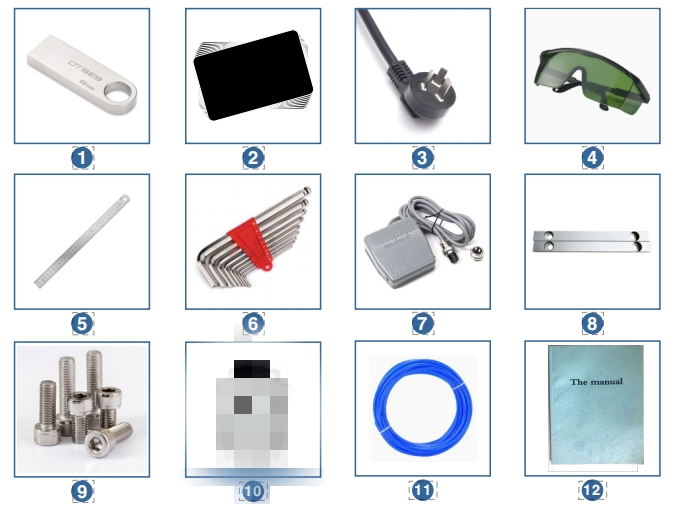
Primary buyers are mid-sized manufacturers (promotional products, packaging), e-commerce fulfillment centers (personalized orders), and print shops (add-on engraving services). These industries face pressure to meet tight deadlines—65% of surveyed manufacturers cite "faster turnaround" as a top priority for 2024.
While efficient laser markers have a 15-20% higher upfront cost than standard models, they reduce operational costs by 25% (due to faster output and lower energy use). ROI typically occurs within 6-8 months for businesses processing 500+ items weekly.
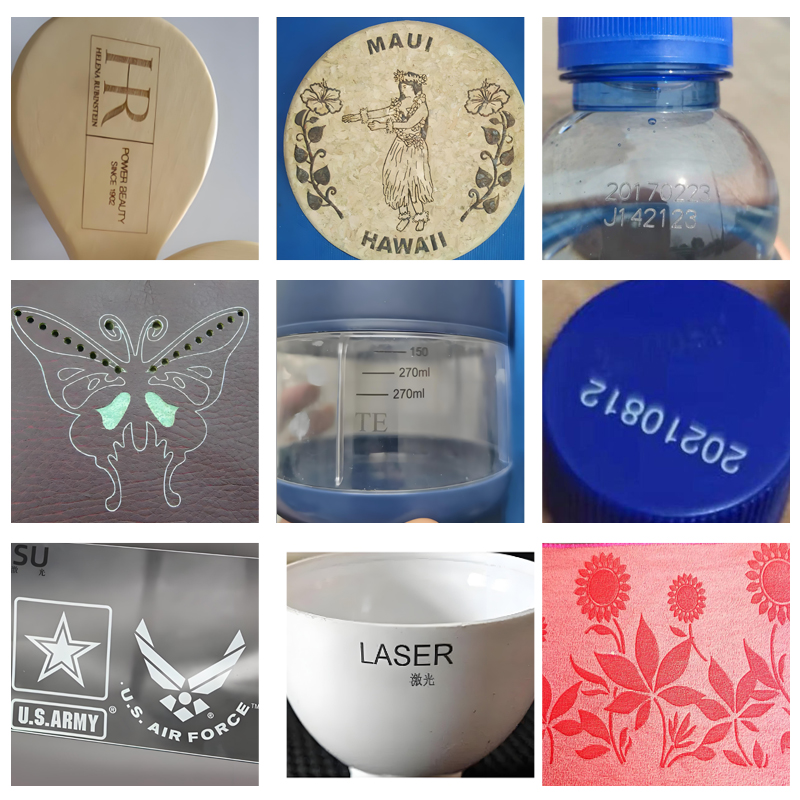

The marker includes a "batch mode" that automates repeated tasks (e.g., marking 100 identical logos) and a "queue management" system that lets users preload up to 5 jobs. It also integrates with ERP software (e.g., SAP, QuickBooks) for order tracking—critical for large-scale operations.
Despite its high speed, it uses a variable-frequency drive (VFD) to adjust power consumption based on workload—using 200W for light jobs and 350W for heavy cutting, 15% less than fixed-power models. A liquid cooling system (instead of air cooling) keeps the laser tube at a constant 25°C, preventing overheating during 12+ hours of continuous use.
Meets ISO 9001 for production efficiency and ASTM D4236 for marking quality. In third-party testing, the 40W model processed 1,200 acrylic tags (3cm x 5cm) in 1 hour—2x faster than a standard 40W CO2 marker. It also maintains a 99.8% defect-free rate for batch jobs, reducing rework time.
The marker supports daisy-chaining (connecting 2-3 units to a single computer) for businesses expanding production. It also has a modular design—users can upgrade the laser tube to 50W later without replacing the entire machine.
For manufacturers, we offer custom automation solutions: conveyor belt integration (for fully automated feeding) or robotic arm compatibility (for handling large/heavy parts). We also program custom software interfaces to match existing production workflows.
Our team provides a free "efficiency audit" for bulk buyers—analyzing current production processes to recommend optimal marker settings, worktable layouts, and staffing schedules. We also offer 1-year free maintenance to ensure long-term efficiency.
The High-Efficient 30W 40W CO2 Laser Marker is built for throughput: it features a high-frequency scanning galvanometer (up to 3000mm/s) and a dual-laser path design that reduces energy loss, cutting marking time by 30% compared to standard CO2 markers. The 40W model, in particular, handles high-volume jobs like serial numbering on packaging or bulk engraving of promotional items with minimal downtime.
Galvanometer
F-θ Lens
Switch Button
Work Platform
Yongli RF CO2 Laser Source
It integrates an automatic material sensor that detects object placement and adjusts laser focus in 0.5 seconds—eliminating manual setup between items. The large worktable (500x300mm) accommodates multiple small parts (e.g., 20 keychains) or single large items (e.g., a 40cm x 25cm wooden sign), further boosting efficiency.
Standard accessories

Primary buyers are mid-sized manufacturers (promotional products, packaging), e-commerce fulfillment centers (personalized orders), and print shops (add-on engraving services). These industries face pressure to meet tight deadlines—65% of surveyed manufacturers cite "faster turnaround" as a top priority for 2024.
While efficient laser markers have a 15-20% higher upfront cost than standard models, they reduce operational costs by 25% (due to faster output and lower energy use). ROI typically occurs within 6-8 months for businesses processing 500+ items weekly.


The marker includes a "batch mode" that automates repeated tasks (e.g., marking 100 identical logos) and a "queue management" system that lets users preload up to 5 jobs. It also integrates with ERP software (e.g., SAP, QuickBooks) for order tracking—critical for large-scale operations.
Despite its high speed, it uses a variable-frequency drive (VFD) to adjust power consumption based on workload—using 200W for light jobs and 350W for heavy cutting, 15% less than fixed-power models. A liquid cooling system (instead of air cooling) keeps the laser tube at a constant 25°C, preventing overheating during 12+ hours of continuous use.
Meets ISO 9001 for production efficiency and ASTM D4236 for marking quality. In third-party testing, the 40W model processed 1,200 acrylic tags (3cm x 5cm) in 1 hour—2x faster than a standard 40W CO2 marker. It also maintains a 99.8% defect-free rate for batch jobs, reducing rework time.
The marker supports daisy-chaining (connecting 2-3 units to a single computer) for businesses expanding production. It also has a modular design—users can upgrade the laser tube to 50W later without replacing the entire machine.
For manufacturers, we offer custom automation solutions: conveyor belt integration (for fully automated feeding) or robotic arm compatibility (for handling large/heavy parts). We also program custom software interfaces to match existing production workflows.
Our team provides a free "efficiency audit" for bulk buyers—analyzing current production processes to recommend optimal marker settings, worktable layouts, and staffing schedules. We also offer 1-year free maintenance to ensure long-term efficiency.
Q: How does this marker compare to fiber lasers in terms of speed?
A: Fiber lasers are faster for metals, but for non-metals (the High-Efficient CO2 marker’s focus), it matches or exceeds fiber laser speed. For example, it marks a plastic bottle cap in 0.8 seconds—same as a mid-range fiber marker.
Q: Can it handle variable data (e.g., unique serial numbers per item)?
A: Yes—the software supports variable data input (CSV, Excel, or database integration) and automatically updates each mark without manual intervention. It can process 1,000 unique serial numbers per hour.
Q: What’s the maximum continuous operation time?
A: With the liquid cooling system, it can run continuously for 16 hours. After 16 hours, we recommend a 30-minute cool-down period to extend the laser tube’s lifespan.
Q: How does this marker compare to fiber lasers in terms of speed?
A: Fiber lasers are faster for metals, but for non-metals (the High-Efficient CO2 marker’s focus), it matches or exceeds fiber laser speed. For example, it marks a plastic bottle cap in 0.8 seconds—same as a mid-range fiber marker.
Q: Can it handle variable data (e.g., unique serial numbers per item)?
A: Yes—the software supports variable data input (CSV, Excel, or database integration) and automatically updates each mark without manual intervention. It can process 1,000 unique serial numbers per hour.
Q: What’s the maximum continuous operation time?
A: With the liquid cooling system, it can run continuously for 16 hours. After 16 hours, we recommend a 30-minute cool-down period to extend the laser tube’s lifespan.
content is empty!