Views: 124 Author: Site Editor Publish Time: 2026-08-24 Origin: Site
Procuring manufacturing equipment carries high financial stakes. Focusing solely on the initial sticker value of a laser system often leads to downstream operational bottlenecks. Decision-makers frequently struggle to balance upfront capital expenditure against required throughput, material compatibility, and long-term reliability. Evaluating laser marking solutions requires a deep understanding of hardware capabilities and production demands. A comprehensive framework is necessary for evaluating the true investment required for a CO2 laser marking machine. Moving from baseline wattage capabilities to facility integration reveals the actual scope of the procurement. Understanding these technical variables ensures your facility selects a system that meets production goals without overspending on unnecessary features or under-equipping for future scaling. We will break down the hardware specifications, material interactions, and facility requirements that dictate equipment selection.
Baseline Investment: Entry-level CO2 laser markers require a lower initial capital outlay, while a production-grade industrial CO2 laser marking machine demands a higher investment depending on tube technology and automation features.
Wattage Dictates Capability: Investment scales directly with power; a 30W system is efficient for surface marking, whereas 60W+ systems command a premium for high-speed, deep engraving and cutting.
Tube Technology is the Primary Investment Driver: The choice between DC glass tubes (lower upfront investment, shorter lifespan) and RF metal tubes (higher initial investment, superior beam quality, and longevity) fundamentally alters long-term operational expenses.
"What's in the Box" vs. Hidden Operational Expenses: True budgeting must account for standard inclusions versus required add-ons like fume extraction, chiller units, replacement tubes, and facility integration, which add to the initial procurement.
Equipment manufacturers segment their machines into distinct tiers based on component quality, duty cycle ratings, and integration capabilities. Understanding these tiers prevents misalignment between your production requirements and the machine's actual threshold. You need to match the machine's build quality to your facility's daily operational demands.
Entry-level systems are engineered for low-volume production and prototyping. These machines typically feature basic analog galvo heads and DC glass laser tubes. The target users are small shops, makerspaces, and facilities with low-duty cycle requirements. When unboxing an entry-level system, you generally receive the machine chassis, a basic power cable, and a standard focal lens. Crucial peripheral equipment, such as industrial exhaust fans and active cooling chillers, are almost always excluded from the base package. These systems lack the robust enclosures and safety interlocks required for heavy industrial environments. Operators must manually adjust focal heights, and the software often lacks advanced automation features. The chassis is usually constructed from lighter sheet metal, which can transfer ambient floor vibrations into the marking process, slightly reducing edge clarity on highly detailed graphics.
Stepping up to mid-range commercial systems introduces significant hardware upgrades. These units feature better optics, entry-level RF metal tubes, and improved software integration. The engineering focus shifts toward continuous operational capability. Manufacturers subject these machines to rigorous factory testing standards to ensure beam stability over longer shifts. Mid-range systems often include upgraded control boards that communicate more reliably with external computers, reducing data transmission errors during complex marking jobs. This tier serves as the workhorse for standard packaging lines and moderate-speed manufacturing environments. You will find better dust sealing around the optical path, preventing particulate ingress from degrading the mirrors. The Z-axis adjustment is typically motorized, allowing operators to dial in the focal distance rapidly when switching between products of different heights.
Industrial-grade systems represent the pinnacle of marking technology. They utilize high-speed 3D digital galvo scanners, premium RF metal tubes, and automated focal adjustment mechanisms. These machines are built for continuous 24/7 duty cycles in demanding environments. The investment reflects the inclusion of CE/FDA safety certifications, harsh environment enclosures, and advanced thermal management systems. Industrial systems seamlessly integrate with factory programmable logic controllers (PLCs) and enterprise resource planning (ERP) software. They execute complex variable data marking, such as serialized QR codes, at high conveyor speeds without missing a pulse. The chassis is heavily weighted and vibration-damped. Optical paths are purged with inert gas or completely sealed to IP65 standards, ensuring zero contamination even in dusty woodworking or textile facilities.
Laser power directly dictates processing speed and material compatibility. Selecting the correct wattage is the most critical decision in the procurement process. Underpowering leads to production bottlenecks, while overpowering results in wasted capital. Each wattage tier serves specific industrial applications.
A 30W CO2 laser marking machine serves as the foundational entry point for commercial marking. This wattage is ideal for high-contrast surface marking on paper, cardboard, wood, and leather. It excels at creating crisp logos and text where deep material removal is unnecessary. However, 30W systems face distinct limitations. They exhibit slower cycle times on denser materials like hardwoods or thick polymers. Furthermore, a 30W system struggles significantly with cutting applications. It cannot efficiently cut acrylic or thick organic substrates without causing excessive thermal damage to the surrounding edges. The lower power output means the laser must dwell longer on a single spot to achieve the desired mark, which increases the overall cycle time per part.
The 40W CO2 laser marking machine represents the standard middle-ground for packaging lines. It provides moderate-speed marking on acrylic, wood, and coated substrates. The trade-off between a 30W and 40W system usually involves a marginal investment increase, but it offers a noticeable bump in processing speed for medium-density materials. The additional 10 watts provide enough thermal energy to lightly cut thin substrates, making it versatile for custom packaging inserts or intricate paperboard designs. It maintains excellent beam quality while offering slightly faster throughput on automated lines. Operators find that the 40W threshold allows for faster vector tracing, reducing the time required to outline complex geometric shapes on product housings.
Deploying a 60W CO2 laser marking machine is required for high-speed fly-marking on moving conveyors. This power level handles deep engraving in dense woods and efficiently cuts thin non-metals like 1/8-inch acrylic. The 60W threshold allows the laser to vaporize material rapidly, preventing heat accumulation that causes edge melting or charring. Operating at this power level introduces specific facility requirements. The increased thermal output necessitates robust active water cooling and dedicated electrical circuits to maintain stable operation during continuous shifts. The rapid vaporization also demands a higher capacity fume extraction system to clear the optical path of smoke, ensuring the laser beam does not scatter before hitting the target material.
High-power systems ranging from 80W to over 100W are designed for heavy industrial applications. They deliver deep material ablation and maximum throughput. The 80W CO2 laser acts as a highly efficient sweet spot. It provides aggressive cutting and engraving speeds without reaching the extreme premium associated with 100W+ systems. These machines process thick acrylics, dense rubbers for flexographic plates, and heavy leather goods rapidly. High-power systems require industrial-grade fume extraction to handle the massive volume of vaporized material generated during operation. The beam delivery systems on these units utilize specialized water-cooled mirrors to prevent thermal distortion of the optics under continuous heavy loads.
CO2 Laser Wattage Application Summary
Laser Wattage | Primary Application | Material Capabilities | Production Environment |
|---|---|---|---|
30W | Surface Marking | Paper, Cardboard, Leather, Soft Wood | Low to Medium Volume, Static Marking |
40W | Moderate Engraving | Acrylic, Hardwood, Coated Substrates | Medium Volume, Packaging Lines |
60W | High-Speed Fly-Marking | Dense Wood, Thin Acrylic Cutting | High Volume, Conveyor Integration |
80W - 100W+ | Deep Ablation & Cutting | Thick Polymers, Rubber, Heavy Leather | Heavy Industrial, Continuous 24/7 Shifts |
Evaluating the true investment requires looking past the initial equipment delivery. Daily operational expenses, maintenance intervals, and software infrastructure dictate the long-term financial viability of the machine. You must account for these variables to accurately project your manufacturing overhead.
Laser systems consume significant electrical power. You must calculate the average hourly electrical draw based on your local utility rates and the efficiency of your peripheral equipment. A high-wattage laser paired with an active refrigeration chiller pulls substantially more amperage than a desktop air-cooled unit. Furthermore, you must factor in the processing time per part. Slower cycle times on underpowered machines increase the labor overhead per unit. While CO2 lasers do not require traditional consumables like ink or chemical solvents, they do require regular lens cleaning supplies, optical tissues, and specialized maintenance kits to keep the beam path clear of debris.
The laser tube is the primary consumable component in any CO2 system. DC Glass tubes require replacement every few thousand hours of operation. The replacement process involves realigning the entire optical path, which causes production downtime. RF Metal tubes, conversely, last tens of thousands of hours before requiring gas replenishment. While the initial investment for an RF tube is higher, the extended lifespan and reduced maintenance downtime yield a superior return on investment for high-volume manufacturers. You must schedule routine preventative maintenance to clean the galvo mirrors and inspect the chiller fluid, ensuring the system operates at peak efficiency.
The software ecosystem driving the laser impacts both operational efficiency and ongoing expenses. Proprietary control software often requires annual licensing fees or paid upgrades to access new features. Open-source or standard software platforms offer flexibility without recurring charges, but they may require more manual configuration. You must also consider potential hidden fees for API access, ERP/MES integration, or custom automation scripting. If your facility requires the laser to pull variable data directly from a central database, you will likely need specialized software modules or custom programming from the manufacturer, which adds to the initial setup investment.
Beyond the raw wattage of the laser tube, internal components drastically influence the final equipment configuration. Upgrading these components improves precision, extends machine longevity, and reduces cycle times. Evaluating these hardware factors ensures you invest in capabilities that directly benefit your specific manufacturing process.
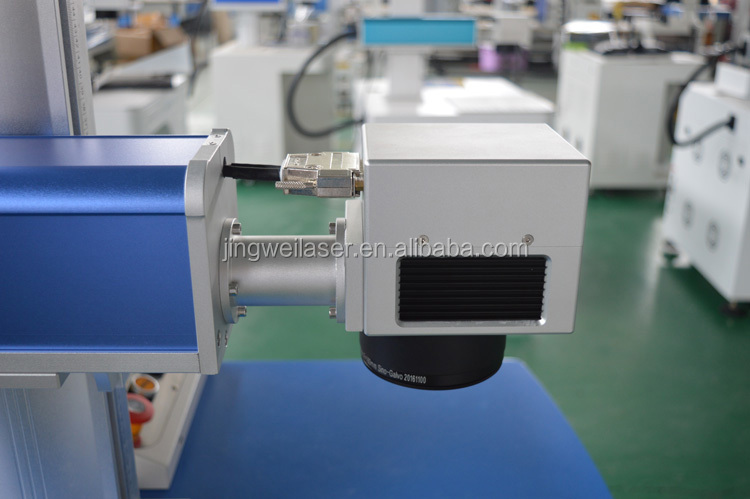
The galvanometer head directs the laser beam across the marking field using motorized mirrors. Premium digital galvo scanners utilize advanced feedback loops to track mirror positioning with microsecond accuracy. This digital precision drastically reduces cycle times and improves edge clarity compared to cheap analog scanners. Analog scanners often suffer from thermal drift. As the motors heat up during operation, the marking positioning can shift slightly, leading to distorted logos or unreadable barcodes. Investing in a high-quality digital galvo head ensures absolute repeatability, which is critical for medical device manufacturing and aerospace component traceability. The speed at which the mirrors can accurately pivot directly dictates the maximum characters per second the machine can output.
The laser source itself presents the most significant hardware choice. DC glass tubes utilize a continuous electrical discharge through a glass chamber filled with CO2 gas. They present a lower initial barrier to entry but suffer from a shorter operational lifespan and slower modulation speeds. The beam profile of a DC glass tube is often wider, resulting in a larger focal spot. RF (Radio Frequency) metal tubes excite the gas using radio waves within a sealed metal chamber. This technology produces a highly refined TEM00 beam profile, allowing for a microscopic focal spot. RF tubes pulse significantly faster, enabling high-speed marking without dashed lines. They also boast a much longer operational life, often exceeding tens of thousands of hours before requiring gas replenishment.
Laser Tube Technology Comparison
Feature | DC Glass Tubes | RF Metal Tubes |
|---|---|---|
Beam Quality | Wider focal spot, lower precision | Microscopic focal spot, high precision |
Modulation Speed | Slower, prone to dashed lines at high speeds | Extremely fast, smooth continuous lines |
Operational Lifespan | Shorter (requires frequent replacement) | Extended (tens of thousands of hours) |
Maintenance Impact | High downtime for realignment | Low downtime, stable optical path |
Thermal management is critical for laser stability. Lower wattage systems often utilize air cooling. Internal fans draw ambient air across the heat sinks to dissipate thermal energy. Air-cooled systems require less maintenance and occupy a smaller physical footprint. However, as wattage increases, air cooling becomes insufficient. Systems operating at 60W and above require active water-cooled chillers. These external units circulate distilled water or specialized coolants through the laser tube jacket. Industrial chillers feature active refrigeration compressors to maintain a precise temperature setpoint. Adding a high-capacity chiller increases the initial equipment list and requires additional floor space. You must monitor chiller fluid levels and clean the condenser coils regularly to prevent thermal shutdown alarms.
The F-Theta lens focuses the collimated laser beam onto the work surface. Standard single-element lenses are prone to spherical aberration. This causes the laser spot to become elliptical at the extreme edges of the marking field, resulting in uneven engraving depth. Premium multi-element F-Theta lenses correct this distortion. They maintain a perfectly round, tightly focused spot across the entire flat marking area. Upgrading to high-quality optics maximizes the energy density of the laser, allowing a lower-wattage machine to achieve results similar to a higher-wattage system equipped with poor optics. You must select the correct focal length for your application; a shorter focal length provides a smaller spot size for high detail, while a longer focal length offers a larger marking area.
The brain of the marking machine is its control board and accompanying software. Genuine, industry-standard control boards process complex vector files rapidly. They support advanced features like rotary axis integration, external trigger inputs, and automated serialization. Counterfeit or clone boards frequently crash during large file transfers and offer limited technical support. Proprietary software suites often require ongoing licensing fees but provide deep integration with specific hardware. Open-source or widely adopted standard software offers flexibility and a massive community for troubleshooting. Selecting the right control architecture dictates how easily the machine integrates into your existing digital workflow.
Procuring the machine is only the first phase. Integrating the equipment into your facility requires careful planning and additional infrastructure. Overlooking these setup requirements leads to delayed deployment and unsafe working conditions. Proper integration ensures the equipment operates at peak efficiency from day one.
Processing organic materials like wood, leather, and acrylic generates significant volumes of smoke, VOCs (Volatile Organic Compounds), and hazardous particulates. Relying on ambient facility ventilation is unsafe and often violates occupational health regulations. Industrial fume extractors are mandatory. These units utilize multi-stage filtration, including HEPA filters for particulates and activated carbon beds for odor and gas neutralization. Sizing the extractor correctly depends on the laser's wattage and the material being processed. High-power systems cutting acrylic require massive airflow to prevent the highly flammable acrylic vapor from igniting within the marking cabinet. You must establish a routine schedule for replacing pre-filters and main HEPA units to maintain adequate suction.
Industrial laser systems draw substantial electrical current. While a desktop 30W system might operate on a standard wall outlet, higher wattage machines and their accompanying chillers require dedicated circuits. Voltage fluctuations in the facility grid can damage sensitive RF power supplies or cause the galvo motors to stutter. Installing power conditioners or uninterruptible power supplies (UPS) protects the equipment. Facilities must verify that their electrical panels can handle the continuous amperage draw of the laser, chiller, and fume extractor operating simultaneously. Grounding the equipment properly is non-negotiable, as static buildup can fry the digital control board instantly.
Integrating a laser marker into an automated production line requires specialized hardware. Fly-marking necessitates rotary encoders attached to the conveyor belt. The encoder sends real-time speed data to the laser control board, allowing the galvo head to adjust the marking trajectory to match the moving product. Optical sensors or proximity switches are required to trigger the marking cycle exactly when the product enters the focal field. Sturdy, vibration-damping mounting stands are crucial. Any vibration transferred from the conveyor to the laser head results in blurry or distorted marks. You must align the laser head perfectly perpendicular to the conveyor surface to ensure consistent focal depth across the entire product width.
Audit your primary material substrates and required production speeds to determine the exact wattage tier necessary for your facility.
Specify RF metal tubes over DC glass tubes if your operation runs continuous industrial shifts to minimize maintenance downtime.
Upgrade your facility's electrical panels and ventilation infrastructure to support the required active chillers and multi-stage fume extractors.
Request physical sample marks on your actual production materials from the vendor to verify beam quality, edge clarity, and cycle times.
Establish a strict preventative maintenance schedule for cleaning optics and replacing filtration media to ensure long-term equipment reliability.
A: CO2 lasers excel at marking non-metallic organic materials. They effectively process wood, paper, cardboard, leather, acrylic, glass, and various polymers. They are widely used for packaging, signage, and textile manufacturing. They cannot engrave bare metals without the use of specialized marking sprays.
A: Select 30W for basic surface marking on paper or leather. Choose 40W for moderate-speed packaging lines. Upgrade to 60W for high-speed conveyor fly-marking or deep wood engraving. Opt for 80W or higher if your process requires rapid cutting of thick acrylics or heavy industrial ablation.
A: No, a standard CO2 laser operates at a 10.6-micron wavelength, which reflects off bare metals. To mark metal with a CO2 system, you must apply a specialized ceramic marking compound. The laser fuses this compound to the metal surface, creating a permanent black mark.
A: DC glass tubes use a high-voltage electrical discharge, offering a lower initial barrier to entry but shorter lifespans and slower pulsing. RF metal tubes use radio frequencies to excite the gas, providing superior beam quality, faster modulation for high-speed marking, and significantly longer operational longevity.
A: Systems operating at 60W and above generally require active water chillers to maintain stable operating temperatures. Lower wattage systems often rely on internal air cooling. Always follow the manufacturer's thermal management specifications to prevent premature tube failure.
A: Galvo-based CO2 lasers are incredibly fast, often reaching marking speeds of 7,000 to 10,000 millimeters per second. The actual cycle time depends on the material density, the complexity of the vector graphic, and the processing power of the digital galvo control board.

 English