Views: 152 Author: Site Editor Publish Time: 2026-08-14 Origin: Site
Transitioning from hobbyist tools to professional fabrication requires moving past marketing claims and understanding the exact hardware capabilities of laser systems. Overpaying for unnecessary wattage drains capital, while under-speccing a machine bottlenecks production, limits material compatibility, and increases manual post-processing. We present a structured evaluation framework for selecting a system based on material science, throughput requirements, and facility constraints. You will learn how to match wattage to material density and understand the hidden footprint of essential peripherals like active water chillers and exhaust ventilation. Making the right hardware choice ensures smooth daily operations, predictable maintenance schedules, and consistent part quality. This guide breaks down the mechanical and optical differences between various setups. We focus on practical shop-floor realities rather than theoretical specifications. You need equipment that runs reliably shift after shift.
Validate your technology choice early: Ensure a CO2 system is the correct investment over entry-level diode lasers or industrial fiber lasers based on your primary materials.
Match laser wattage (40W to 150W+) directly to material density and required cutting speed, rather than defaulting to the highest budget option.
Factor in the hidden footprint and costs of essential peripherals—active water chillers, exhaust ventilation, and air compressors—when calculating ROI.
Choose between DC glass and RF metal laser tubes based on the required balance between deep cutting power and high-resolution engraving precision.
Evaluate safety and compliance standards (Class 1 vs. Class 4 enclosures) to dictate facility requirements, insurance compliance, and operator training.
Selecting the correct laser technology depends entirely on the wavelength absorption of your target materials. Diode lasers typically operate around the 450nm wavelength. They offer a lower entry barrier and high portability. However, diode systems struggle significantly with clear or blue acrylics because the material does not absorb the blue light. The beam passes straight through the sheet, leaving it untouched. They also operate at much slower cutting speeds, making them unsuitable for volume production. Fiber lasers operate at the 1,064nm wavelength. This makes them strictly required for cutting bare metals like steel, brass, and aluminum. Fiber systems represent a massive jump in capital investment and require specialized safety enclosures. CO2 lasers operate at the 10,600nm wavelength. This specific wavelength is perfectly absorbed by organic materials. It makes the CO2 platform the absolute industry standard for non-metals. It provides high-speed processing for wood, leather, and all colors of acrylic, including completely transparent sheets. You get clean, flame-polished edges on acrylic straight off the machine.
You must clearly identify your primary compatible materials before purchasing hardware. Standard processing materials include wood, acrylic, leather, fabric, paper, rubber, and glass. You also need to acknowledge strict hardware limitations. A standard CO2 system cannot cut bare metals. The beam simply reflects off the surface, which can actually bounce back and destroy your focal lens. However, you can permanently etch metals using specialized marking sprays like CerMark. You can also process anodized aluminum directly, as the laser removes the anodized coating rather than the metal itself. Safety remains an absolute priority. You must never process PVC, vinyl, or polycarbonate. Cutting these plastics releases highly toxic, corrosive chlorine gas. This gas destroys the machine's internal components, rusts the linear rails overnight, and poses severe respiratory hazards. You also need to distinguish between full-depth cutting requirements and surface-level scoring needs, as this dictates your wattage requirements.
Laser Material Processing Capabilities
Material Type | Cutting Capability | Engraving Capability | Safety Notes |
|---|---|---|---|
Wood (Plywood, MDF, Hardwood) | Excellent | Excellent | Requires high-PSI air assist to prevent charring. |
Acrylic (Cast and Extruded) | Excellent | Excellent | Cast acrylic engraves white; extruded cuts cleaner. |
Leather and Fabric | Excellent | Excellent | Strong exhaust needed for odor control. |
Glass | None | Excellent | Requires rotary attachment for cylindrical objects. |
Bare Metals (Steel, Aluminum) | None | Requires Marking Spray | Beam reflection hazard if processed without spray. |
PVC and Vinyl | Strictly Prohibited | Strictly Prohibited | Emits lethal chlorine gas and hydrochloric acid. |
Production volume dictates the physical build quality you require. Calculate your expected daily operational hours. Intermittent prototyping demands different hardware than continuous manufacturing. Assess the impact of cutting speed on your production bottlenecks. Faster travel speeds reduce labor time per part. This directly impacts business scalability when expanding a custom signage or merchandise company. If you plan to run jobs back-to-back for eight hours a day, you need robust linear rails and heavy-duty stepper motors. When scaling production, a reliable CO2 laser cutting machine becomes the backbone of your workflow. It handles high-volume nesting jobs efficiently. You must also consider the duty cycle of the laser tube. Pushing a glass tube at maximum power continuously degrades its lifespan rapidly. Proper sizing allows you to run the machine at 70% power while still hitting your target cycle times. This thermal headroom prevents the cooling system from being overwhelmed during long vector cutting operations.
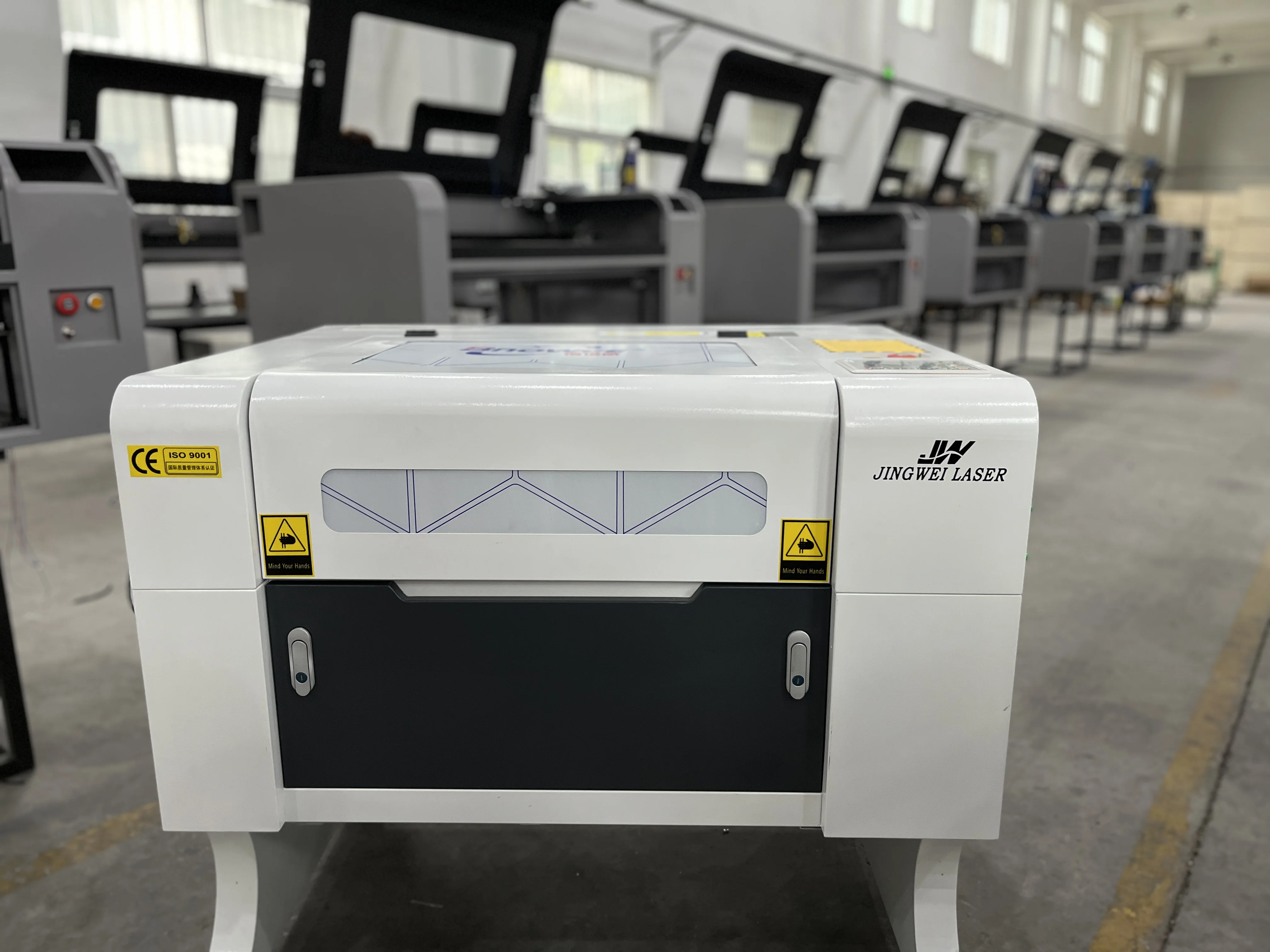
Space constraints often dictate the initial hardware choice. These compact units serve specific operational environments. They are ideal for small businesses, prototyping labs, and home workshops. A desktop CO2 laser cutting machine fits easily through standard doorways and rests on standard workbenches. However, you must accept inherent physical limitations. These machines feature lower maximum wattage, typically capping between 40W and 60W. They have smaller bed sizes that require you to pre-cut raw material sheets on a table saw before loading them. They also often rely on passive cooling systems rather than active refrigeration. The chassis is generally lighter, which means high-speed raster engraving might induce vibrations. These vibrations can cause slight banding in highly detailed photo engravings. Despite these limits, they provide an accessible entry point for scaling operations. You just need to manage your throughput expectations and plan for more frequent material handling.
High-volume production requires rigid hardware architecture. These systems feature heavy-duty welded steel gantries. This mass absorbs vibrations during rapid directional changes, allowing for aggressive acceleration settings. They utilize servo motors for high-speed accuracy and closed-loop feedback. An industrial CO2 laser cutter integrates seamlessly into existing manufacturing workflows. You must plan for facility integration factors. This includes ensuring forklift access for initial installation and leveling the machine on concrete floors. You might also need automated material handling features. Conveyor beds allow for continuous feeding of rolled fabrics or flexible plastics. These machines support high-capacity active chillers to maintain thermal stability across multiple shifts. The gantry design often utilizes high-precision linear guide rails rather than cheaper V-slot wheels. This ensures dimensional accuracy remains tight even after thousands of hours of travel.
Certain environments require strict adherence to safety and compliance standards. Educational institutions, retail spaces, and corporate labs demand fully enclosed, Class 1 safety systems. A fully closed CO2 laser cutting machine protects operators from scattered radiation and hazardous fumes. These units feature specific hardware safety mechanisms. They include built-in exhaust routing that forces all smoke through a designated port. The viewing windows use tinted safety glass specifically rated to block 10,600nm wavelengths. Magnetic interlock safety mechanisms immediately disable the firing sequence if a user opens the access door during operation. This prevents accidental exposure to the invisible beam. The enclosed chassis also helps maintain negative air pressure. This ensures that foul odors from cutting acrylic or leather do not leak into the surrounding workspace. You can operate these units in office environments provided you have adequate HEPA filtration attached to the exhaust port.
The source of your laser beam defines the machine's capabilities. Direct Current (DC) glass tubes remain highly cost-effective. They provide higher peak power for thick cuts. They require active water cooling to prevent the glass from shattering under thermal stress. They have a shorter operational lifespan, typically ranging from 2,000 to 8,000 hours depending on usage habits. They also have a slower pulsing rate, which can slightly blur fine details at high speeds. Radio Frequency (RF) metal tubes carry a high upfront cost. They are usually air-cooled, eliminating the need for bulky water chillers and plumbing lines. They produce superior beam quality with a much smaller spot size. This allows for highly responsive pulsing, resulting in flawless high-detail engraving on materials like anodized aluminum or dense hardwoods. RF tubes also boast a significantly longer lifespan, often reaching up to 20,000 hours before requiring a gas recharge.
DC Glass vs. RF Metal Tube Characteristics
Feature | DC Glass Tube | RF Metal Tube |
|---|---|---|
Cooling Method | Active Water Cooling | Air Cooling (Usually) |
Beam Spot Size | Larger (Better for wide kerf) | Smaller (Crisp detail) |
Pulsing Speed | Slower response time | Highly responsive |
Expected Lifespan | 2,000 - 8,000 hours | Up to 20,000 hours |
Initial Investment | Lower | Significantly Higher |
Wattage dictates both your maximum cutting depth and your engraving resolution. Systems in the 40W to 60W range are optimized for thin materials. They easily handle up to 1/4-inch wood or acrylic. They also excel at high-resolution engraving because lower wattage tubes generally produce a tighter beam profile. An 80W to 100W CO2 laser engraving and cutting machine serves as the standard sweet spot. It balances efficient cutting capabilities for up to 1/2-inch materials with highly acceptable engraving detail. Stepping up to 130W or 150W+ provides dedicated cutting power for thick acrylics and dense hardwoods. However, higher wattage tubes require a longer focal lens. This results in a larger beam spot that degrades fine engraving quality. You cannot easily achieve crisp 300 DPI photo engravings with a 150W glass tube. Match the wattage strictly to your primary daily application. If you only cut 1/8-inch plywood, a 150W tube is a massive waste of resources and will yield worse engraving results than a 60W tube.
Bed size directly impacts material handling efficiency. You should size the bed to accommodate standard raw material sheets. Common sizes include 12x20 inches, 24x36 inches, and 4x8 feet. Matching the bed to your supplier's sheet size minimizes the labor spent pre-cutting stock on a table saw. You must also evaluate the Z-axis depth. A motorized Z-axis allows you to lower the bed significantly. This accommodates rotary attachments for processing cylindrical objects like bottles and glasses. It also allows you to engrave thick custom items like assembled wooden boxes. Pass-through doors add immense value. They allow you to feed oversized materials through the Y-axis, processing infinitely long sheets in sections. Workflow automation features save setup time. Auto-focus sensors eliminate manual focal gauge measurements. Overhead camera systems allow for precise artwork placement on irregular scrap materials, maximizing material yield. You can visually drag and drop your vector files directly onto the material shown on your monitor.
The drive system determines positional accuracy. Standard stepper motors are cost-effective and reliable for most applications. Servo motors operate faster and feature closed-loop feedback. This feedback prevents skipped steps during high-speed rastering, ensuring the gantry always knows its exact physical location. Optics play an equally critical role. You must understand focal lens selection. A 1.5-inch lens provides a tiny spot size for fine engraving but has a very short depth of field. A 2.0-inch lens acts as the standard hybrid for both cutting and engraving. A 4.0-inch lens maintains a straight beam over a longer distance, making it necessary for straight edges on thick cuts. The quality of your mirrors also matters. Molybdenum mirrors are highly durable and resist scratching during cleaning. Gold-plated silicon mirrors offer slightly higher reflectivity but require extremely delicate handling to avoid surface damage. You must clean them with optical-grade lens tissue and high-purity isopropyl alcohol.
The laser chassis is only one part of the functional system. You must integrate essential peripheral equipment for safe operation. Cooling is non-negotiable for glass tubes. You need active refrigerated water chillers, such as the CW-5000 or CW-5200 series. These units contain actual compressors and refrigerant to maintain water temperatures around 18°C. Inadequate passive radiators, like the CW-3000, only circulate ambient air and will allow the tube to overheat during long jobs. Fume extraction requires serious consideration. High-CFM inline exhaust fans venting outside represent the most efficient method. If you operate in a ductless setup, you must invest in multi-stage HEPA and carbon filtration units to scrub the exhaust. Air assist is equally critical. High-PSI air compressors push air through the nozzle to evacuate debris from the kerf. This prevents material charring, extinguishes flare-ups, and protects the focal lens from smoke damage. Do not rely on the small aquarium pumps included with budget machines; upgrade to a quiet, high-capacity shop compressor.
The hardware controller dictates how your computer communicates with the machine. DSP controllers, specifically from brands like Ruida or Trocen, stand as the industry standard. They offer rock-solid reliability and allow for offline job processing via USB drives. They process complex vector paths smoothly without stuttering. Software compatibility can make or break your daily workflow. You must ensure compatibility with LightBurn. This software represents the gold standard for laser operation, offering intuitive design tools and precise layer management. Avoid machines that lock you into clunky proprietary software. Relying on outdated plugins for CorelDraw or Illustrator creates frustrating workflow bottlenecks. A modern DSP controller paired with LightBurn allows operators to import designs, assign cut parameters, and execute jobs within minutes. You can set different speeds and power levels for individual colors in your vector file, automating the entire cut and score process.
Where you purchase the machine dictates your operational downtime. Direct-from-manufacturer imports require lower upfront capital. However, they demand high technical competency. You assume responsibility for DIY troubleshooting, manual alignment, and routine maintenance. If a power supply fails, you must diagnose it yourself using a multimeter. Domestic or fully supported brands carry a higher initial cost. This premium is offset by robust warranties and accessible customer service. They provide immediate availability of replacement parts from local warehouses. Having a technician available via phone to walk you through a complex mirror alignment saves days of lost production. Evaluate your internal technical capabilities before deciding between a direct import and a supported domestic brand. If you run a production shop where downtime costs thousands of dollars a day, the premium for domestic support pays for itself during the first major hardware failure.
Installing a high-power optical tool requires strict facility preparation. Managing fire risks is your primary safety objective. The intense heat of the beam can easily ignite wood resins or acrylic masking paper. You must enforce a policy of constant supervision. Never leave a running machine unattended. Optimized air assist acts as the first line of defense against flare-ups. You must also mount CO2 fire extinguishers immediately adjacent to the machine. Never use dry chemical extinguishers, as the powder will destroy the linear rails and optics. Electrical requirements also demand an audit. High-wattage machines and active chillers draw significant amperage. Verify whether your facility supports standard 110V circuits or if you need dedicated 220V lines installed by a certified electrician to prevent breaker trips during operation. Ensure your exhaust venting complies with local municipal codes regarding emissions.
Optical systems require regular calibration to maintain cutting efficiency. You must master the learning curve of mirror alignment. This involves adjusting the three-mirror flying optic system to ensure the beam hits the exact center of the focal lens across the entire bed. You perform this by firing test pulses at near and far positions on the Y and X axes. Misaligned mirrors result in ghosting, loss of cutting power, and angled kerfs. Routine maintenance dictates your machine's longevity. You must implement a scheduled cleaning protocol for all optics. Smoke residue on a lens will absorb the laser energy, causing the lens to heat up and eventually crack. You also need to clean and lubricate the linear guide rails regularly. Debris buildup on the rails causes the gantry to bind, leading to dimensional inaccuracies and premature wear on the drive belts.
Audit your primary materials and required cutting depths to determine the exact wattage needed, avoiding the trap of over-speccing the laser tube.
Measure your facility space to ensure adequate clearance for the machine chassis, active water chiller, and high-CFM exhaust ventilation system.
Verify that your chosen machine utilizes a Ruida or Trocen DSP controller to guarantee full compatibility with LightBurn software.
Establish a strict daily maintenance schedule for cleaning focal lenses and checking mirror alignment to maintain optimal cutting performance.
A: No, standard CO2 systems cannot cut bare metals. The 10,600nm wavelength reflects off the surface. You need a fiber laser to cut steel or aluminum. You can, however, use specialized marking sprays to permanently etch designs onto bare metals using a CO2 system.
A: A DC glass tube typically lasts between 2,000 and 8,000 hours depending on your power settings and cooling efficiency. Running the tube constantly at maximum power degrades it rapidly. RF metal tubes can last up to 20,000 hours before needing a gas recharge.
A: Air assist blows a constant stream of compressed air directly into the cut line. This evacuates vaporized material, prevents the edges from charring, and suppresses flare-ups. It also creates positive pressure inside the nozzle, preventing smoke from drifting up and ruining the focal lens.
A: The CW-3000 is merely a passive radiator with a fan. It only cools the water to ambient room temperature. The CW-5000 is an active refrigerated chiller with a compressor and refrigerant. It actively cools the water to a specific set temperature, which is mandatory for high-wattage glass tubes.
A: Absolutely not. Cutting PVC or vinyl releases hydrochloric acid gas and toxic chlorine gas. This gas is highly lethal to breathe and will instantly begin corroding the metal components, rails, and electronics inside your machine. Always verify material composition before cutting.
A: Most modern systems use DSP controllers that are fully compatible with LightBurn. LightBurn is the industry standard software for layout, editing, and machine control. It allows you to import vector files, assign speeds and powers, and send the job directly to the machine.

 English