Views: 147 Author: Site Editor Publish Time: 2026-08-17 Origin: Site
The physical mechanics of a laser system directly dictate its production capabilities, operational efficiency, and maintenance requirements. Misunderstanding the underlying technology often leads to misaligned equipment selection. Facilities might choose a machine that struggles with the target material. They might select a system that requires excessive consumable replacements. Alternatively, they may invest in equipment that fails to scale with production volume. Breaking down the exact working principle of a CO2 laser provides clarity. You must understand everything from gas excitation to focal optics and CNC integration. Operations managers and technical buyers can then objectively evaluate equipment specifications. This technical foundation helps forecast maintenance cycles accurately. It ultimately determines the optimal machine format for your specific facility requirements.
Wavelength Specificity: Operating at a 10.6 µm wavelength, the technology is highly absorptive for organic materials, making it the industry standard for a non metal laser cutting machine.
Core Mechanics: The system relies on electrical stimulation of a specific gas mixture (Carbon Dioxide, Nitrogen, Helium) within a sealed resonator tube to generate a concentrated photon beam.
Maintenance Realities: Unlike solid-state alternatives, CO2 systems utilize physical mirrors and lenses for beam delivery, requiring scheduled alignment, cleaning, and eventual replacement.
Scalability: The core working principle remains identical across form factors, allowing businesses to scale from a mini CO2 laser cutting machine for prototyping to a large format CO2 laser cutting machine for industrial production without changing fundamental workflows.
A laser beam begins inside a sealed resonator tube. This glass or metal cylinder contains a precise mixture of three primary gases. Each gas performs a specific function in the generation of light. The mixture typically consists of around 10% to 20% carbon dioxide, 10% to 20% nitrogen, and the remainder being helium. Nitrogen captures electrical energy first. It holds this energy efficiently without reacting or breaking down. Carbon dioxide acts as the active medium. It emits photons when stimulated by the energized nitrogen molecules. Helium makes up the largest percentage of the mixture and serves two specific purposes. First, it cools the gas mixture by transferring heat to the tube walls. Second, it helps transfer depleted energy molecules back to their resting state so they can be excited again.
Gas purity directly impacts the lifespan of the laser source. Contaminants inside the tube degrade the electrical discharge and cause the beam mode to deteriorate. Tube sealing quality is equally important for long-term reliability. Micro-leaks allow helium to escape over time. This loss of helium reduces cooling efficiency. It ultimately leads to inconsistent cutting power, poor edge quality on thick materials, and premature tube failure.
Generating the beam requires high voltage. A dedicated power supply applies this voltage across the electrodes located at each end of the tube. This electrical discharge excites the nitrogen molecules inside the cavity. The nitrogen molecules vibrate intensely and collide with the carbon dioxide molecules. This physical collision transfers energy directly to the CO2.
This process creates a state called population inversion. Population inversion is a specific physical threshold. It occurs when more molecules exist in an excited state than in a resting state. Reaching this threshold triggers a cascade of photon emission. The carbon dioxide molecules release photons as they drop back to their resting energy level.
The resonator cavity amplifies this light to create a usable beam. The cavity features a fully reflective mirror at the rear. It has a partially transmissive mirror at the front. This front mirror is called the output coupler. Photons bounce back and forth between these two mirrors. They stimulate the emission of more photons with every single pass through the gas mixture. The light amplifies until it possesses enough energy. It then escapes through the output coupler as a coherent, focused laser beam ready for delivery.
Manufacturers utilize two distinct types of resonator tubes. Direct Current (DC) glass tubes are the most common in standard fabrication shops. They utilize a continuous high-voltage electrical current. DC tubes are water-cooled and feature a simpler internal glass structure. They have a shorter operational lifespan. However, they excel at delivering high peak power for cutting thick materials like heavy acrylic or dense hardwoods.
Radio Frequency (RF) metal tubes operate differently. They use radio waves to excite the gas mixture instead of high voltage. RF tubes are typically air-cooled, eliminating the need for external water chillers in lower wattage models. They produce a significantly faster pulse rate. This rapid pulsing allows for extreme precision during raster operations. They maintain a longer operational life before requiring a gas recharge. You must map your tube selection to your production requirements. Continuous heavy-duty cutting favors the raw power of DC tubes. High-detail, high-speed engraving demands the rapid response of RF tubes.
Comparison of Laser Tube Technologies
Feature | Glass DC Tube | Metal RF Tube |
|---|---|---|
Excitation Method | High Voltage Direct Current | Radio Frequency Waves |
Cooling Requirement | Active Water Cooling (Chiller) | Air Cooling (Fans) or Water for High Wattage |
Pulse Speed | Slower (Optimal for continuous cuts) | Extremely Fast (Optimal for fine engraving) |
Beam Quality | Good (Standard spot size) | Excellent (Tighter spot size) |
Typical Lifespan | 2,000 - 8,000 Hours | Up to 20,000+ Hours |
The physical movement of the machine relies on precise digital control. A Digital Signal Processing (DSP) controller acts as the brain of the system. It translates digital design files into physical movements on the cutting bed. Software converts vector graphics into G-code. The DSP reads this G-code instantly. It synchronizes the firing of the laser tube with the movement of the gantry.
The gantry moves along the X and Y axes using industrial motors. Stepper motors are standard in most systems. They move in discrete steps and are highly reliable for general fabrication. Servo motors offer a significant performance upgrade for high-demand environments. They operate in a closed-loop system. Servo motors constantly verify their exact position using encoders. This feedback loop allows for higher acceleration speeds. It also prevents skipped steps during rapid engraving sequences, ensuring dimensional accuracy on large production runs.
Most systems utilize a flying optics design. The laser tube remains completely stationary at the rear of the machine. The beam travels to the cutting head via three highly reflective mirrors. Mirror one sits directly in front of the laser tube. It reflects the beam 90 degrees to mirror two. Mirror two mounts to the side of the moving Y-axis gantry. It reflects the beam another 90 degrees to mirror three. Mirror three sits inside the moving cutting head on the X-axis.
This configuration introduces a significant implementation risk. Precise mirror alignment is absolutely mandatory. Misaligned mirrors cause the beam to strike the inside of the nozzle. This results in severe power loss at the material surface. It causes angled cuts instead of straight edges. It also creates inconsistent kerf widths across different areas of the cutting bed. Operators must routinely check alignment by firing test pulses into thermal paper placed over the mirror targets.
The beam reflects off the third mirror and travels straight down. It then passes through the focal lens. This lens converges the parallel laser beam into a high-density focal point. The focal point is where the beam achieves maximum heat and cutting power.
Lenses come in different focal lengths. Common sizes include 1.5-inch, 2.0-inch, 2.5-inch, and 4.0-inch lenses. A shorter focal length creates a very small spot size. This is ideal for high-resolution engraving on materials like anodized aluminum or coated brass. However, it has a shallow depth of field. A longer focal length creates a slightly larger spot size. It maintains a straight beam over a longer distance. This greater depth of field is necessary for cutting thick materials like half-inch acrylic or thick plywood.
Selecting the correct focal lens dictates the maximum material thickness the machine can cleanly sever. Using a short lens on thick material results in excessive edge charring. The beam diverges and burns the sides of the cut, ruining the dimensional tolerance of the part.
A nozzle surrounds the focal lens. This nozzle directs a stream of coaxial assist gas directly into the cut. Operators typically use compressed air, nitrogen, or oxygen depending on the application. The assist gas performs a dual function.
First, it clears vaporized material away from the kerf. It blows the molten plastic or carbonized wood through the bottom of the cut. This prevents the material from igniting and causing a bed fire. Second, the positive pressure protects the focal lens. It prevents smoke, soot, and debris from traveling up into the cutting head. A dirty lens absorbs laser energy, overheats, and eventually cracks under thermal stress. Adjusting the gas pressure is mandatory. High pressure clears deep cuts in wood, while low pressure prevents frosting on the edges of clear acrylic.
The specific wavelength of the light determines what materials it can process. CO2 technology operates in the far-infrared spectrum at 10.6 micrometers. Organic and synthetic materials absorb this specific wavelength exceptionally well. This high absorption rate makes it the dominant non metal laser cutting machine in the manufacturing industry.
The beam instantly vaporizes these materials upon contact. Acrylic is a prime example. The laser yields perfectly flame-polished edges without secondary processing, saving hours of manual polishing. Wood and MDF cut cleanly with minimal edge charring when using proper air assist. Other optimal materials include leather, paper, textiles, fabrics, and rubber. Specific polymers also process beautifully, provided they do not contain halogens that release toxic gases.
The working principle adapts seamlessly to different applications. Vector cutting requires continuous, high-power beam delivery. The DSP controller traces the digital lines. The laser tube fires a steady stream of energy. The gantry moves smoothly to sever the material completely. Operators control the speed and power settings to match the material density.
Raster engraving utilizes a completely different dynamic. The gantry sweeps back and forth rapidly across the X-axis. The laser tube pulses on and off thousands of times per second. This rapid, variable-power pulsing vaporizes microscopic dots of material. It builds a high-resolution image line by line, similar to an inkjet printer. The machine adjusts the pulse frequency to create different depths and shading effects on the material surface.
Standard CO2 systems possess a strict physical limitation. They cannot process highly reflective metals. Materials like copper, brass, and aluminum reflect the 10.6 µm wavelength. The metal acts like a mirror to the infrared light.
This reflectivity causes beam bounce-back. The laser energy reflects off the metal surface and travels backward up the optical path. This bounce-back risks severe damage to the focal lens and the mirrors. It can even destroy the laser tube itself if the energy travels all the way back to the source. Fiber lasers operate at a 1.06 µm wavelength. Metals absorb this shorter wavelength efficiently. Buyers must establish clear boundaries between metal and non-metal applications when evaluating equipment for their shop floor.
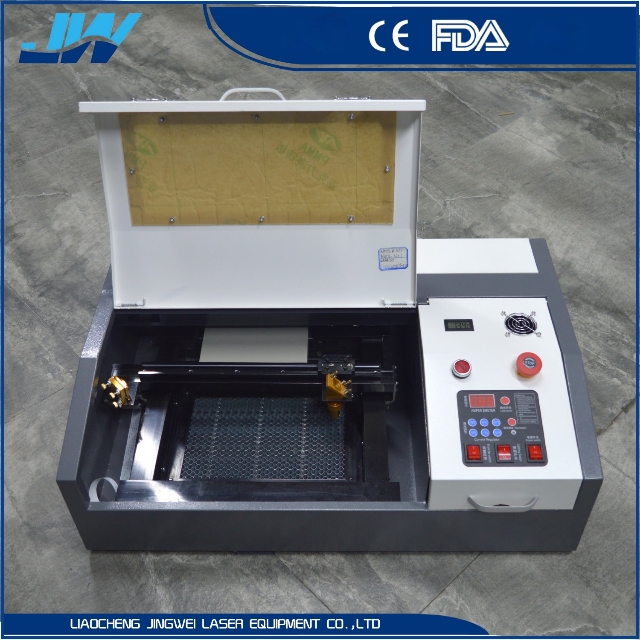
Equipment format must match the physical constraints of your facility. A mini CO2 laser cutting machine serves specific operational needs. It is ideal for limited footprint facilities. Research and development labs utilize them frequently for rapid prototyping. They excel in low-volume custom fabrication environments where space is at a premium.
This format requires accepting certain trade-offs. The physical size limits the maximum wattage of the laser tube, usually capping around 40W to 60W. Lower wattage restricts the maximum cutting thickness. The smaller bed size also restricts raw material dimensions. Operators must pre-cut large sheets before processing them in a mini system. Despite these limits, they offer excellent precision for small, intricate parts.
Mid-volume production requires more robust equipment. A cabinet CO2 laser cutting machine represents the industry standard for commercial use. These systems offer a practical balance of power and footprint. They typically house tubes ranging from 80W to 150W, providing enough power to cut through thick acrylics and dense woods efficiently.
Fully enclosed designs provide superior exhaust extraction. The cabinet traps smoke and fumes effectively. The exhaust fan pulls the contaminated air out of the building. Enclosed cabinets also ensure Class 1 safety compliance. They prevent accidental exposure to the invisible infrared beam. This safety feature is essential for busy commercial environments with multiple operators. Many cabinet models also feature pass-through doors, allowing operators to slide oversized materials through the machine for continuous processing.
Industrial manufacturing demands maximum throughput. A large format CO2 laser cutting machine is engineered for heavy-duty processing. These machines accommodate full-sheet raw materials without pre-cutting. Bed sizes often exceed 4x8 feet. They handle roll-to-roll textile cutting effortlessly, making them popular in the apparel and signage industries.
These systems support continuous, multi-shift operation. They integrate easily with automated material handling systems. However, they require significant floor space. They demand robust industrial chilling systems to maintain tube temperature under heavy loads. Their high-wattage tubes also result in higher overall power consumption. Facilities must ensure they have the electrical infrastructure to support these large-scale systems.
Operating this technology requires managing specific consumable lifecycles. The laser tube is the primary consumable component. DC glass tubes degrade over time, even when not in use. You should expect a lifespan of 2,000 to 8,000 hours. This variance depends heavily on your average operating wattage. Running a tube constantly at 100% power drastically shortens its life. Operators should aim to run tubes at 80% maximum power to extend longevity.
The optical components also require eventual replacement. Focal lenses degrade from heat exposure and microscopic scratches during cleaning. Mirrors lose their reflective coating over time, reducing the amount of power that reaches the cutting bed. You must plan for periodic replacement of these optics to maintain peak cutting efficiency.
CO2 laser technology generates significant heat. The excitation process is relatively inefficient. These systems typically exhibit a 10-15% wall-plug efficiency. This means 85-90% of the electrical energy converts directly into heat rather than light.
Thermal management is an absolute necessity. You must utilize an industrial water chiller for glass tubes. The chiller circulates distilled water through a cooling jacket surrounding the tube. It maintains the water at a precise temperature, usually around 18°C to 20°C. Undersized chillers fail to remove heat fast enough during long cutting jobs. Overheating causes the beam mode to degrade and permanently damages the tube. Ambient shop temperature also plays a role; facilities in hot climates require larger capacity chillers to compensate for the environmental heat.
Consistent maintenance dictates machine reliability. You must implement a strict routine maintenance schedule to prevent unexpected downtime.
Daily Tasks: Inspect and clean the focal lens. A single speck of carbon on the lens can cause it to crack under thermal stress. Empty the debris tray to prevent fire hazards.
Weekly Tasks: Perform mirror inspections. Dust settles on the mirrors and reduces beam power. Clean the linear rails and apply fresh lubricant to ensure smooth gantry motion.
Monthly Tasks: Check the optical path alignment. Vibrations from the gantry motion can slowly shift the mirror brackets. Realignment ensures the beam strikes the exact center of the focal lens. Inspect the chiller water and replace it if algae or debris is present.
Installing a laser system introduces specific environmental risks. Inadequate ventilation is the most severe hazard. Vaporizing organic materials creates toxic fumes and heavy smoke. Accumulation of these fumes poses severe health risks to operators. It also causes rapid degradation of the machine's mechanical components as sticky residue coats the belts and rails.
Mitigation requires proper sizing of exhaust extraction systems. The exhaust fan must generate sufficient cubic feet per minute (CFM) of airflow to clear the cabinet rapidly. You must also consider inline filtration based on the materials processed. Cutting acrylic produces strong odors. Cutting MDF produces heavy, sticky particulate matter. HEPA and activated carbon filters neutralize these hazards before venting outside. Facilities must also ensure adequate makeup air enters the room to replace the air exhausted by the blower.
The invisible nature of the 10.6 µm beam presents unique safety challenges. Eye damage is a severe risk. The beam can cause severe burns instantly. Fire hazards are also prevalent. Cutting flammable materials like cardboard or oily woods can ignite the cutting bed if the air assist fails.
Implementing strict operational protocols mitigates these risks. Operators must never leave a running machine unattended. They must utilize the air assist properly to suppress flare-ups. Facilities must ensure the machine meets local safety enclosure standards. Interlock switches must immediately disable the laser tube if a user opens the cabinet door. Proper training on material safety data sheets (MSDS) ensures operators never attempt to cut hazardous materials like PVC.
A CO2 laser cutting machine remains the most versatile technology for processing non-metallic materials. It delivers unmatched edge quality on acrylics, woods, and textiles. Success depends entirely on understanding the physical limitations of the optical system. You must commit to the required maintenance demands to ensure consistent production. Base your final equipment choice on specific operational factors like material thickness, sheet size, and facility exhaust capabilities.
To ensure a successful implementation, follow these next steps:
Request thorough time-studies from manufacturers using your specific vector files to verify real-world production speeds.
Send your exact raw materials to the vendor for sample cuts, and inspect the edge quality under magnification.
Audit your facility's electrical and ventilation infrastructure to confirm it can support the required industrial chillers and exhaust blowers.
Establish a strict daily and weekly maintenance log for operators to track lens cleaning and mirror alignment.
A: Glass DC tubes typically last between 2,000 and 8,000 hours. Metal RF tubes can operate for 20,000 hours or more before requiring a gas recharge. Lifespan depends heavily on operating power levels, cooling efficiency, and how frequently the machine is used.
A: Standard commercial CO2 lasers cannot cut metal. Metals like copper, brass, and aluminum reflect the 10.6 µm wavelength, which can bounce back and destroy the machine's optics. While exceptionally high-power industrial CO2 systems with oxygen assist can cut mild steel, fiber lasers are the correct technology for metal processing.
A: A glass DC tube uses high voltage, is water-cooled, and offers a slower pulse rate ideal for continuous cutting. A metal RF tube uses radio frequencies, is air-cooled, and pulses extremely fast, making it superior for high-resolution, high-speed engraving.
A: CO2 lasers are relatively inefficient, converting 85-90% of electrical energy into heat. A water chiller continuously circulates distilled water around the glass tube to remove this heat. Without a chiller, the tube will rapidly overheat, lose cutting power, and crack.
A: Mirrors should be checked weekly and realigned whenever you notice a drop in cutting power, inconsistent kerf widths, or angled cuts. Vibrations from standard operation can slowly shift the mirror brackets out of perfect alignment over time.
A: You must never cut PVC (Polyvinyl Chloride) or any vinyl-based materials. Vaporizing PVC releases highly toxic chlorine gas. This gas is dangerous to operators and mixes with moisture in the air to form hydrochloric acid, which rapidly destroys the machine's metal components.

 English